Wednesday, July 4, 2012

Barbacoa in Orinda

The latest addition to Theatre Square in Orinda has what it takes to titillate the most discriminating palate in Lamorinda. Called a Mexican Grill, a pretty ubiquitous label, Barbacoa serves food that's unique in the area: creative, seasonal, flavorful and healthy. True to the concept of co-owners Victor Ivry and Michael Karp, Chef Jason Moniz brings the techniques of authentic Mexican cooks, extracting the flavor of fresh and quality ingredients. Two weeks after opening it was hard to get a reservation on Saturday night because Barbacoa is not only good, it is also fun, energetic and relaxing.
 Set in the heart of Theatre Square, Barbacoa proposes three different zones to diners: the dining room that's bordered by an open kitchen; the full bar that will stay opened as long as customers are around and where small dishes are served; and the outside patio. "So far the outside tables have been very popular," says Karp. The open air restaurant is full of energy. It is far enough from the street, but still benefits from the movement of people walking around the Square, or going to a movie. 
 The outside tables are bordered by flower boxes, and a large umbrella above is enough to create an ambiance yet allows diners to see the stars at night. While part of the common area of the Square, that space is now reserved for Barbacoa during open hours, between 11 a.m. and 11 p.m., but people can sit there and have their coffee in the morning if the fancy strikes them.
 Moniz is creating at Barbacoa a type of food he loves. "I've always loved authentic Mexican cuisine and wanted to learn it from the local cooks in villages," he says. Moniz made study trips to Mexico, eating, getting to know and relate to the cooks, working and learning the local techniques from observation. "Mexican cuisine is very creative and manifold, it is also very tasty and healthy," he says. 
 One of the things he learned was re-cooking or refrying of sauces. "All the ingredients are first roasted in the oven, pureed, then refried with a little fat," he says. "It changes the texture, concentrates the flavors, and mellows out some of the chilies, removing the bitterness and adding some sweetness." 
 Late in the morning the kitchen is bustling with activity. Broth is simmering on a stove, beans are cooking, "some are vegetarian and will be finished with dried avocado leaves," says Moniz who prides himself in having everything made from scratch, with ingredients as close as possible to what is found south of the border.
 "For example we use epazote (a tasty green leaf) for black beans and the mushroom taco, and annatto seeds paste (ground on site) for the barbacoa," says Moniz.
 Barbacoa, that gives its name to the restaurant, is pork marinated in annatto, citrus and garlic, and roasted in the big Aztec wood stove that has a place of honor in the middle of the kitchen. It is one of the staples of a menu that offers a wide variety of options to people with different tastes, dietary needs and spending habits. There are a lot of meats, seafood and vegetables in the menu, served as tacos, big plates, salads, or soups. The bodin de elote (zucchini pudding) or the Empanada de Flor de Calabaza (stuffed zucchini flowers) will surprise and delight some customers. The barbacoa is definitely a must try, as well as the rotisserie items. Being able to order tacos individually and mixing the types is a great idea; the variety of fish dishes is a wonderful option. The full bar features an extensive list of cerveza, tequila and cocktails.
 Ivry and Karp, who also own Table 24, wanted this concept of an authentic Mexican cantina to be embodied in every element of the restaurant, including the dcor and the music. "Our architect, The Construction Zone, also has a shop and built some of the elements such as the planters. They hand-clad all the steel counters, the gleaming copper hood, and built the banquets," says Karp. The walls of the open kitchen are tiled with imported Mexican tiles, and Arizona artist Lalo Cota came for 10 days from Phoenix to paint the colorful murals.
 "We offer an opportunity for all demographics to come out and enjoy themselves," says Karp. "Someone can order one taco and a side of beans, while another can have a premium item. We cater to children, families, and adults later in the night."

Saturday, June 30, 2012

Open Sky, Wilderness Therapy Students Reflect Back on Their Story


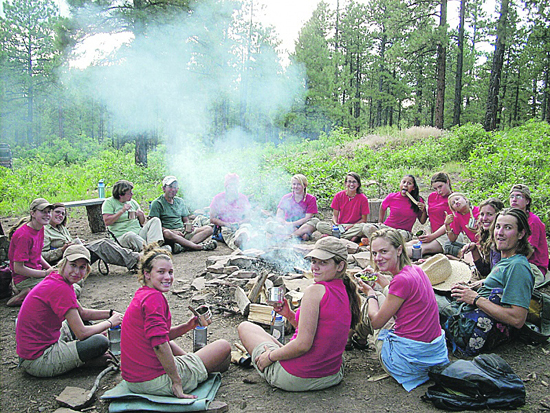
James* set up the tarp that was going to protect him during the night and started making a fire for his dinner.  He was alone, completely alone in the middle of the woods, and that solitude was to last three days.  He had nothing to do but read, write, wander around and think.  This was not punishment, in fact, when James talks about his experience at Open Sky, the wilderness therapy program for teens and young adults, he says ‘the solo’ was for him the best part of the 10 weeks he spent there.  “This was a time of self-discovery and reflection,” remembers the young man, “it was a life changing experience.”

James was a star athlete at Campolindo high school and a student with excellent grades.  He had also started to experience with alcohol and recreational drugs when he was about 14/15 years old.  The problem got worth when he went to college.  After classes were dropped and very difficult times with his family, James was hospitalized at John Muir in rehabilitation for 30 days, then his parents suggested he go to Open Sky, a 8 to 10 weeks wilderness therapy program.

The center admits students age 13 to 28 with everything from depression to substance abuse to eating disorders to ADD. It cuts them off from their normal life, without any electronics, immersed in nature, in group with peers and constant supervision.  “This is not a all a bootcamp,” says Dc Jade Wimberley, a local naturopathic physician who’s a friend of founder Aaron Fernandes and has been working at Open Sky since 2006, “this is a place for assessment, treatment planning, and to start healing.”  The food is organic, the staff is experienced and all of them are trained psychologists.  The camp has a psychiatrist on site at all times.

“The schedule was very rigorous, it was not easy,” remembers James “but I met absolutely amazing people that took us on the journey.”  James characterizes Open Sky as a soul searching experience, “I went in not knowing a lot about myself, shielding a lot of my feelings with drugs and alcohol,” he said “I got help finding out who I was, and how to improve my life.”

“Put into nature, they have to do everything for themselves,” says Victoria*, mother of Ashley* another Lamorinda raised kid who went to Open Sky a few years ago, “they are surrounded 24/7 by highly qualified therapists, including an on site psychiatrist, who deal with emotional issues on the spot.”  She adds that the difference is that as they are in nature, with no other resource than themselves, confronted with the natural consequences to their actions.

“They are unplugged from society, and stripped of everything including their clothes (everyone wears the same clothing),” adds James’s mother Linda*,  “after a few weeks, they become part of nature and let go, and start to understand about themselves.”

The experience at Open Sky was very dramatic for Ashley. In her early years, she was a very passionate ballerina, until severe hips injury ended her dreams.  Her parents reacted to signs of depression and she started seeing a long list of therapists and doctors.  “She was diagnosed with ADD, later with bipolar disorder and was heavily medicated,” said her mother, “but nothing really worked.”

After failing college, Ashley herself sought Open Sky because of a Miramonte friend who’s brother had been there and had greatly benefited.  “At Open Sky, people finally saw me for who I was,” says Ashley, “until then everyone thought that something went wrong with me.  What I needed was to process things that happened to me as a child and that were missed because I was resilient and had a lot of friends.”  Ashley thinks that the pursuit of perfection and the need to maintain a positive image drove her to question her self worth.

“At Open Sky the medical staff took the risk to start weaning her off medication, and they were very careful about it,” says Victoria.  “I learnt so much there,” adds Ashley,  “this is a very magical place, with such amazing energy, it is so affirming.   The staff has a level of authenticity that is rare, they really relate to the young people.”

When she left Open Sky, the young woman had started to cut down her medication.  “It didn’t happen overnight, it took 2 years,” says Victoria.  For many youth, Open Sky is just the beginning of the road to recovery.  Ashley went to facilities while partly back in school and is now finishing her bachelor degree.  “I am graduating this year, I’m dancing again.  I’ve started my life over as a different person,” says Ashley.

James also went to a different facility after Open Sky, where he started taking classes and then went back to college.  He graduated this year in Anthropology.  “Before I went to Open Sky, I wanted to do everything on my own,” he reflects, “there, I learnt about accepting help from other people, and reaching out.  My relationships with others in my age group increased tremendously, I learnt to communicate.  This has been the most important life changing experience in my life.”

Linda adds that the impact of the program has been huge on the whole family.   “As parents we had to go to therapy every week and talk to Jame's therapist every week,” she remembers, “it was very interactive.”  She also remembers the ‘impact letter’ that all in the family, siblings included, had to write.    “The impacts letters were huge,” she says.  She went to therapy with her husband for a year, and Open Sky gave them books to read. “I became more opened about my feelings, I’m letting myself feel,” she says.

Today James says that he has gained awareness about his addiction, “we don’t ever get rid of it, it will always be with me,” he says, “but I am able to pinpoint warning signs and pull myself out of the situation.”  Ashley has found a new sense to her life, “I feel a sense of duty, I’m driven by something bigger than myself and I want to go into medicine. I found my light and I want others to find it,” she says.

“We’re fortunate that we could afford it,” concludes Victoria, “the insurance does not cover it, but it is your child and you would do everything.”  The cost is about $485 per day, which translates into $27.000 to $34.000 for the 8 to 10 weeks program.  Some scholarships are available.  For more information about Open Sky, contact Dr. Jade Wimberley at jade@openskywilderness.com


*the names of the youth and their parents have been changed to protect their privacy.  The parents currently live in Lamorinda.  They shared their stories to help other struggling teens

Years of Yearning – A Book About the Making of Modern Saint Mary’s College


Br. Mel Anderson at Saint Mary's College
When he walks about the college where he still lives and teaches The Great Books, the tall silhouette of Brother Mel Anderson cannot be mistaken or ignored.  But many of the students who roam the grounds today ignore that this man led Saint Marys for nearly 30 years (1969 to 1997) and slowly and steadily stirred the heavy boat over the troubled waters of the 70s, 80s and 90s, introducing such novelties as co-ed, bigger and better business schools and school of education, resisting the attraction of extreme change where he thought the College would lose its soul, turning it into a profitable institution, and shepherding the emergence of the mission statement of the college, words that he would hope to see turning into reality in the 21st century.

The book he wrote about his presidency, Years of Yearning, is a personal depiction of the challenges and the politics that exist in an higher education institution.  It tells a large part of the history of the local College.

 “I was asked to take the Head of the College starting in 69, at a time of great societal changes,” said the Brother during an interview.  During the 60’s the college moved away from the Catholic tradition that had been his since its establishment.  It was the time of the in the civil right movement, the nearby campus of Berkeley was a center for students and faculty activism against the Vietnam war and Saint Mary’s was pulled in the same direction.

“My view was more traditional,” said the Brother, “changes were becoming too drastic, the teachings too secularized.  It was a time of chaos in Higher education, and I was told that I was chosen as President because of my understanding of the philosophy of the college.”

Maintaining the core ethos of Saint Mary’s is the string that follows Brother Mel’s action all along his life; how Christian values can shed their light in Liberal education; invite discussions and debates, while staying true to the Gospel of Christ.  “There are some important questions that are raised today in the world,” he says, “a Catholic Liberal Art University has the mission of making sense of our world from our religious perspective.”

This does not mean that Brother Mel didn't want change, in fact he invited it.  “I knew that this College had to become Co-ed,” he says.  The transition from a male only institution to one that welcomed women was not too hard.  Brother Mel remembers a few acerb remarks the first year, such as “here come the skirts”, but they were soon forgotten and today Saint Mary’s, like most colleges, has more female than male students.

Accepting women allowed the Brother to revitalize a program that was limping along: the school of education.  “There was no high quality school for future teachers in Contra Costa,” he remembers, “but I had to change the leader of the education program and that could not happen before the end of his contract.”

After the School of Education, Brother Mel wanted to start an MBA program. “The idea was opposed by some members of the faculty assembly who said that business did not have anything to do in a liberal arts college,” remembers Brother Mel.  But the MBA project prevailed and was started with teachers from the Haas School of Business (UC Berkeley).

Brother Mel was the initiator of other innovations on campus such as the School of Nursing, the internationalization of campus, and a vocational program for older adults that was partially transferred to the University of Phoenix.  “As we added students and schools, we had to build new structures.”  The President tried to keep the campus as a work of art and hired a Japanese architect that had a sense of John J. Donovan’s original design.

In his book, Brother Mel shows how each inflection of direction required balancing of the dynamic of the different powers on campus.  Even a Brother President is not God, the extent of his power is hiring and appointment.  Brother Mel explains that the major changes are decided by the Board of trustees, and that when faculty votes, the President simply has a veto power.

All the while, as the college developed, Brother Mel said that he strived to maintain the spiritual focus of the college.  “We needed to clarify our vision as the college grew,” he said.  He refers to Pope John Paul II text Ex Corde Ecclesiae that says that from the heart of the Church comes the University.  “We need controversy and adversary position, that makes the Church stronger,” says Brother Mel, “but we need to have a strong core of Catholic thinkers in the college who represent our Lasallian values.”  Brother Mel explains that the Lasallian values teach that the students are images of gods, “we look at them that way, they have a soul,” he says.  Brother Mel believes that salvation through Christ is the ultimate goal, but the College does not practice proselytism, “There is no chapel talk, we let it happen, or not, naturally.  We teach through our Christian attitude and eventually some students come around, we just plant a seed.”.

As part of the preservation of the spiritual persona of the College one of the most important task of Brother Mel’s tenure was the definition of the mission statement: “To probe deeply the mystery of existence by cultivating the ways of knowing and the arts of thinking.  To affirm and foster the Christian understanding of the human person which animates the educational mission of the Catholic Church. To create a student-centered educational community whose members support one another with mutual understanding and respect.”

Brother Mel says he would have liked to preside the implementation across the board of the mission, “those who sow the seeds are not those who reap the harvest,” he said. And this is where the title of his book comes from, the yearning that is still his to see his dream finally take shape.

Today Brother Mel continues to live on campus and participates in the Great Books program that’s opened to students, alumni and the community.  His book can be purchased at the campus’ bookstore.

Friday, August 13, 2010

Financing The Future Of Residential Energy Efficiency.


On April 1st, Contra Costa County Climate Leaders, aka 4CL, held a workshop for local governments to help them better understand the implementation of Assembly Bill 811 and “California First”.   Taken together, they represent a new and innovative strategy that helps homeowners improve the energy efficiency of their homes through the use of “contractual assessments” on the owners’ annual property tax bill.  Representatives of Lafayette, Moraga and Orinda attended the meeting with the intent of gathering information on what is, at first glance, both an interesting and potentially complex idea.

Sam Sperry, Esq., opened the meeting with a presentation on the conceptual framework of the program.   It allows owners of residential property in participating cities and counties to finance green energy, energy efficiency and/or water conservation projects. One of the essential benefits of the program is that when owners decide to sell their home, they can either repay the loan or transfer it forward to the next property owner.  Sperry explained that the initial AB 811 program was too consuming of staff time for small government jurisdictions to consider managing.  As a result, the concept of California First was born.     

 ‘California First” relieves cities and towns from all the application process, making it more likely for Lamorinda to be able to join in. Renewable Funding is the company that provides the turnkey administration and financing called “California First”. Kelly McKenna, from Renewable Funding, explained that the plan calls for counties to “opt in” first, then cities can follow.  Homeowners identify the work to be done, choose a pre-qualified contractor and apply for financing through a web portal handled by Renewable Funding.

The amount of money available is quite significant.  “Each County jurisdiction that participates in California FIRST has the initial capacity to finance up to $1 billion in projects, based on the structure of the Program,” said Renewable Funding Regional Program Manager Mike Marcus, “Once that cap is met, it can be easily increased by means of a simple Resolution passed by the California Statewide Communities Development Authority (CSCDA).”  To give context, assuming an average finance amount of $18,000 per project, a $1 billion cap allows for the financing of roughly 55,556 projects within one county alone.


“The first phase of the program has already been completed and 14 counties have opt in,” said McKenna (Countra Costa County is not one of them), “In Sonoma County, where the program is already in place, jobs in construction have increased by 8.4%, compared to 1% in other jurisdictions.”  Sperry indicated additional economic benefits that accrue from the program.  Where the program’s already in place, the largest investment in new projects is air conditioning, followed by energy efficient pool pumps, and solar systems come in third.

Jason Crapo, Deputy County Administrator for Contra Costa County, presented the County’s perspective.  “I expect that the County will choose to participate in the next round,” said Crapo who indicated that the measure would have to be approved by the Finance Committee before the Board of Supervisors votes on the matter.  Gayle Uilkema, Supervisor for District II said that she had not yet made a decision. “We have not considered it yet and when it comes I will study it,” she said adding that funding factors would have to be taken into consideration.

The one time total cost paid to Renewable Funding for the County and all its municipalities is $75,000.  In Alameda, the county dedicated its Energy Efficiency Conservancy Block Grant  (EECBG) money for this purpose.  Otherwise, each municipality that joins pays its share until the $75,000 is reached.  For Lamorinda communities, the amount would be about $10,000 each and for the county itself $20,000.

Monica Pacheco, Assistant to the Orinda City Manager who was present at the meeting, said she was a bit nervous because of the County’s financial situation.  “Orinda has received a few calls of interest for residential solar financing options,” she said.  In other towns where interest is high, Councils are considering passing resolutions to encourage the County to join the program.  The city of Richmond was the first to do so.  “The Council has not yet had the opportunity to review a proposed resolution to encourage the County to join California First,” said Pacheco, “but staff is preparing one to send to council soon.”  According to Ann Merideth, Community Development Director for Lafayette, the City has not discussed whether it was interested in such a program yet. “The purpose of a staff person to attend the meeting was to bring back information for the City Manager to evaluate,” said Merideth.

In the meantime, 4CL is working on a new workshop to identify sources of financing for the upfront cost to join “California First.”

“From what I know so far, it is a good idea, but we need to find source of financing for the $10,000 joining fee and be sure that the impact on staff is minimal,” said Moraga Mayor Ken Chew

Moraga Goes Ga-Ga over Gaels


Brenda Mossotti got her family up very early on the morning of Wednesday, March 24th to be on the Saint Mary’s College (SMC) campus in time for the “send-off” of the men’s basketball team as it began its journey to Houston to take on Baylor last Friday, March 26th, in the NCAA championship playoffs.  SMC had not seen a team advance to the “Sweet 16” since 1959, and Moraga is rallying around its players.

“The kids really wanted to come,” says the Moraga mother of three school-age children, “it was the highlight of their day, they got to see Omar (Samhan), they talked to him, had pictures taken, and were so excited to go back to school and tell all their friends.” 

At 7:30 a.m. the Mossottis were among about 200 people from Moraga and beyond that came to cheer the team as it departed. “There were five or six media trucks from all over,” says Moraga Mayor Ken Chew, who was also there.  “This is great for the college and for the town,” he adds, “it will increase Saint Mary’s visibility and enrollment and it can be good economically for the town as well.”  All over Moraga, banners supporting the team are hanging proudly.

For the players too, the community fervor brings a new feeling of belonging. “It’s just unreal,” said Samhan in an interview for Saint Mary’s, “you’re so happy to see the media and your friends and family and they welcome you with open arms and are so proud of you. There’s such a sense of community. The community feels like they’re in the Sweet Sixteen. It’s such a bond we have with such a small town, you know people come up to me in the streets and say, ‘Do it for us!’”

Many celebrations have taken place of over the last several days.  On the morning of Saturday the 20th and in the afternoon of Friday the 26th community members, alumni, and students gathered at the college to watch the televised games.  On the night of Saturday the 20th, when the team came home at 11:30 p.m. after its victory against Villanova, police and fire department vehicles escorted the team bus and hundreds of supporters gathered at the campus in a boisterous and festive atmosphere. 

On Friday the 26th, Moraga School District Superintendent Rick Schafer (a Saint Mary’s alum) encouraged staff and students to wear red and blue to show their support for the team.

Even if the team got defeated by Baylor, residents offered them a warm welcome-home when they returned on Saturday morning.  Deafening sirens and supporters of all ages brought a lot of excitement to a campus that had been mostly deserted due to the beginning of Spring break.  “I have been following the basketball team since 1978,” said Rossmoor resident and former Moraga resident for 37 years Fred Cady, “it’s the best they’ve ever done, and I’m sure they’ll do just as well next year.”

Moraga Mayor said that the town would organize a great civic celebration for the team in the coming days.  The date has not been set yet, but the event should take place at the Moraga Commons at the beginning of April.

The Phoenix That Won’t Die - Rheem Theater Back From The Dead.


The story has all the ingredients for a great movie:  hope and despair, new developments and failures, resilience and redemption, brave entrepreneurs and industrious politicians, and most of all many good-hearted community people… the only thing it does not have, is a dénouement.  It is the story of the Rheem Theater in Moraga.  Like the Phoenix, it is has been dead more than once, and like the mythical bird it managed each time to rise from its ashes.  Its plumage is slightly different with each revival.  This time, as the California Independent Film Festival Association (CAIFFA) is taking over the business, the true colors are going to be those of community building, “it’s not going to be our theater,” said Derek Zemrak, President and Founder of CAIFFA, “it is going to be the community’s.”

CAIFFA is a non-profit organization created in 1997 to propose world-class films to Bay Area patrons.  Up until now it did not have a place to call its own.  The Association was presenting film festivals in different theaters, most recently in Orinda, where 75 films were shown between April 23rd and 25th.  CAIFFA is being very successful because it is creating events around the movies.  “Why still go to the movies when people can see movies in their homes?” asks Zemrak, “Because we create events where people can share, meet directors and movie stars, share food and drinks.” 

That said, the organization is not taking over Rheem to transform it into a permanent film festival.  “It is our desire to continue to present the Film Festival in Orinda, while in Moraga we will run the theater with the community and offer a wide varieties of movies,” says CAIFFA Beau Behan who will be in charge of Rheem.

“We hated to see that place close,” adds Zemrak, “that’s why we got in touch with the owner Mike Puri, and he was very accommodating.”  The plan is to play blockbuster movies to continue to please families with titles such as Toy Story 3, Shrek Ever After, or The Karate Kid.  They will propose as well new releases of independent films that cannot be seen anywhere else in Lamorinda, films like The Girl with the Dragon Tattoo, Precious, Crazy Heart and The Messenger.  And that is only part of what “The New Rheem Theater” ambitions to become.

“We will conduct an outreach program with the community,” says Zemrak, “we will be contacting local groups and invite everyone to join.”   From these discussions should come preferences for special programs and series that will be tailored to the Lamorinda needs.  Already proposed are a Silent Film Program, a Passport Series featuring international films, Musical Films, Educational features, Kids’ Matiness, etc…  CAIFFA wishes to partner with community organizations to support their ideas and programming.  There are thoughts of re-opening the kitchen located in the theater, may be transforming one of the theaters into a lounge area, offering a wine bar.

CAIFFA members have started to meet with the community.  Edy Schwartz, President of the Chamber of Commerce, Council Member Howard Harpham and Lamorinda Wine Grower Association Carol Haag that are very involved in the grass root effort to save the theater are very hopeful about the new deal.  “We are thrilled that they could move this quickly and we are looking forward to this bright new future,” said Haag.  She went with Harpham to visit “The Lark” a historical community theater in Larskpur and discussed the business model with the manager there.  “The visit was very interesting, The Lark has been very successful for 6 years in Larkspur” said harpham, “but there are some significant differences between the two theaters.”  The first one is that the organization that runs the theater in Larkspur owns the place, and therefore investors are not hesitant to commit for the long term.  Second, if Harpham does not question the initial enthusiasm that will most probably come from the community, he is aware that success will depend on its long term and on-going support.

“We are doing this to support the arts and we know that the Lamorinda community will rally around the project,” says Behan, “we are committed for the long term and simply want to give back.”  The soft opening is scheduled for June 18.  For more information and updates, go to thenewrheemtheater.com.  Behan is available for those who wish to share ideas and/or get involved, he can be reached at Beau@caiff.org


Tuesday, April 27, 2010

Attracting Wild Life in Moraga

Dan Bernie is not lukewarm when it comes to integrated pest management. Yes, the chemical-free methods to maintain the town’s properties is more expansive, and it demands more man-hour, but it works, and it’s healthier for Moragans and their children. An additional benefit to the community is that in researching about natural ways to deal with pests, Bernie, Moraga Public Work Superintendent, has learnt about how to use beneficial wildlife to control pests such as gophers and rats. With the help of an Eagle Scout, Kevin Gustafson, and the support of the Mt Diablo Audubon Society, Moraga is becoming more “owl-happy”. And it is just a beginning, since Bernie has in his files, plans to integrate bats nesting and raptors poles.

The Audubon Society functioned as a facilitator. “Dan (Bernie) wanted barn owl boxes in the Commons for gopher, rat and mouse control. Kevin (Gustafson) was looking for a project. There was wood available from construction of the new Walnut Creek Library and edge braces for the inside of the box available from a Council election campaign signs. Then lumber available from a material recycler for posts to mount the boxes on as well as help available to cut the boxes from the material recycler,” explains Murphy, “so Kevin's job was to assemble all of the resources available for his Eagle Scout project - we just brought the resources to Kevin's attention and he put them together.”

“I didn't really know that much about integrated pest management until I met Mr. Murphy and began the project,” says the Scout, but Gustafson quickly got very interested in a method that permits to deal with pests without the pesticides. “The process allows resident rodents to provide food for breeding barn owls,” explains Murphy. One couple of owls with chicks may consume as many as 1000 rodents by the time the chicks leave the nest. According to the California Council for the Wildlife Rehabilitation, approximately 26 million years ago the first Barn Owl appeared on earth; and since then Barn Owls have reigned supreme as one of the most efficient hunters on wings, and they were the farmer’s best friends when it came to rodent control.

For his project Gustafson worked cooperatively with others. “I was supplied the blueprints by the Audubon society. I then measured and cut the wood. Later my friends, many of whom are fellow boy scouts, and I assembled the boxes,” he says. The boxes will be installed in both Moraga public parks is the coming weeks. “Mr. Bernie and I specifically picked locations that we felt would discourage people from messing with the owl boxes,” says Gustafson, “also the boxes are 12 feet up in the air.”

For Bernie, the owl box project is exemplary of how IPM works. “I learnt about owls in a training session in Walnut Creek and bats in an EBMUD publication,” says the Superintendent, “and that will be one of my next project, getting bats to nest under the pedestrian bridge that connects Moraga Commons to the library.” A brown bat eats its own weight in insect in a night, and they love mosquitoes. They can catch 1,200 of them in an hour. Bats also pollinate many plants, and produce guano, a prized fertilizer.

“The Town of Moraga did the biggest jump of them all, and stand in front of all Contra Costa,” says a proud Bernie refereeing to Moraga’s IPM policy. After the bats, Bernie plans to set raptor poles in strategic places in Moraga so hawks will perch and catch gophers coming out during the day. For these projects he is hoping to enroll Scouts for the completion.

Bernie’s efforts to eliminate all chemical use in public places in Moraga include as well adding mosquitoes eating fishes in Mulholland ponds and switching all the janitorial supplies to “green” chemical free soaps and cleaning supplies. “We will never go back,” concludes the Superintendent.

Sunday, October 25, 2009

Budd MacKenzie, A Man Consumed By His Passion For Freedom

From the dangerous zones of Afghanistan to the comfort of his Lamorinda life, Budd MacKenzie is a tireless traveler working for reconstruction and long-term development. He is a man who wants to change to world, or, on a most modest scale, a man who wants to bring permanent development and freedom to men and women living in regions of Afghanistan where an uncommon journey has taken the man who was President of the Lafayette Chamber of Commerce in 2006 and 2003-2004 Lafayette Citizen of the Year. Over the past 6 years, his non-profit, “Trust in Education” (TIE), has achieved results that would make any international NGO proud.

MacKenzie commitment started with an article he read about Greg Mortenson (Central Asia Institute) and the schools he was sponsoring in Afghanistan. TIE agreed in 2004 with the villagers of Lalander (16 miles south of Kabul) to construct a secular school for boys and girls. Politically engaged, MacKenzie believes that no nation should topple another’s government, without taking on in the reconstruction that follows. “Our commitment is clear,” says MacKenzie, “be part of the rebuilding effort.”

His way of changing the world is “village to village”. First TIE gave funds to pay for teachers ($80 a month per teacher) and build a school including the girls who had been kept out of the education system for years under the Taliban’s regime. MacKenzie’s first cause in Afghanistan was educating the women. “Even now in the villages I cannot talk directly to the women, when I arrive they disappear at the back of the house,” he says. MacKenzie confesses that there is no better way to appreciate women than having to deal only with men. The Afghan government has affirmed its objective of educating women, but in reality, when cuts are made it is to girls’ education. Girls in school are about 1/3 of their male counterparts and most parents don’t see the need for girls’ education past the elementary level, if at all.

In Lalander and neighboring villages now TIE pays for 27 full time teachers, more than half of the 839 students are girls, a new school has been built, with swing sets. All has been done in cooperation and with the support of local leaders and the Afghan Department of Education. “One key to success is to involve the villagers and their leaders in the process and to make the program transparent and verifiable,” says MacKenzie.

The second cause is “food-cloth-shelter”. “Once I got involved and after visiting Afghanistan, there was no pulling back,” said MacKenzie. “Working for education is working for the future,” he adds, “but these people have seen their country devastated, their economy ruined, all has to be rebuilt.” On these issues as well MacKenzie is working in partnership with local experts and authorities, while learning to avoid the risks of corruption.

The results are remarkable. TIE has enabled the plantation of over 22,000 fruit trees, continues to financed the purchase of seeds and fertilizer for 140 farmers, has provided 300 sheep (5 per farmer for 60 farmers) through its microcredit program, has provided 5600 lbs of clothing, blankets and other items, gave the money for the material to build 4 bridges, has transferred the technology of a hydraulic ramp pump that does not require electricity or gas with the help of Solano Community College students, is working on a dam that will prevent the snow run off from flooding land farmed by over 50 families. “The purpose is not to sprinkle emergency help, but to engage in a long term strategy of development that will bring independence to these people,” says MacKenzie.

Along the way MacKenzie and his team decided to support the Aschiana Project, a well organized and controlled program that sponsors Afghan street children and send them back to school. An estimated 60,000 children work on the streets of Kabul, begging, selling gum, looking for scrap metal, shining shoes, and doing whatever it takes to survive. For $20 a month, parents commit to sending their child to school instead of the street. “Our permanent project managers in Kabul help follow up each of every of the kids, making sure they indeed go back to school,” says MacKenzie. This personal one-on-one engagement has been very successful with some of Lamorinda elementary schools that now sponsor one or more children. MacKenzie is even thinking of setting conference call to make the relationship even more personal.

The man needs continuing support. School of all levels are encouraged to pick up the idea and sponsor a number of school age children in Afghanistan. Over the years they will get to know them, and see how they grow up. MacKenzie gives regular talks all over the community to present his results to those who have donated and raise interest of new partners. His next speaking engagement is on September 9th at the Moraga Valley Presbyterian Church at 8:00 a.m. “I’d like many people to come and hear what has been done,” says MacKenzie, “bring a friend, and ask questions, I’ll be there just for that.” The address of the engagement is 10 Moraga Lane, it’s opened to the public, a $3 breakfast will be served, RSVP to Bob Prindle 631-1142. For more information go to www.trustineducation.org

Bodhi Seed Camp, Awakening Young Minds

For the first time, the Buddha Gate Monastery of Lafayette proposed a camp for children age 5 to 15 where they learnt to meditate, Buddhist values and Chinese culture, mingled with more traditional fun activities. Quite an unusual experience in Lamorinda!

The Buddhist Monastery is nestled on a peaceful property at the northern border of Lafayette. The camp proposed from August 2 to 7 for 80 kids was full. Classes were taught by the Abbess, Master Jian Sheng, herself and many other volunteers. Evan Cushing was the head of the T.A.s. A native of Lafayette, he is a college student majoring in philosophy and religion. “The children were amazing,” he said, “most of them had had no previous experience of meditation and/or Buddhism. Some hated it at first, but they got taken by the Abbess story telling abilities and through her guidance learnt to quiet their bodies and mind. After 2 or 3 days they got the knack of it and loved it.”

The children confirmed, “It is hard to concentrate on nothing,” said Uma who will be attending 6th grade at Stanley Middle School, “you make sure your body is completely still and after I really enjoy the calm.” She plans to continue the practice, especially before tests. “I like to sit still,” added 10 years old Irene.

The young T.A.s enjoyed the camp as well. 15 years old Alan Deaton who will be a Junior at Miramonte had never had any exposure to that culture and practices, he said “Once I was able to do it, it was cool, it felt really relaxing and I was truly focused afterward.” Deaton was interested by the whole camp, and, even if he does not think he would become a vegetarian, enjoyed the values that were taught.

Meditation is a technique that is central to the Buddhist teaching. “Meditation is a way to raise awareness and reveal one’s true nature,” said the Abbess, “in our busy lives our minds get scattered. Meditation helps to re-center inward.” She was very impressed by the children who came to the camp. “They were very active and present,” she said, “they followed guidance and participated eagerly.”

Meditation was just a part of the daily activities of the children. They experienced Tai Chi, Dharma instruments, candle making, mosaic, gymnastics among other activities. The Monastery did not require any payment for the camp. “This is Dana giving,” explains Margaret Goglia a Moraga resident who has been involved with Buddha Gate for 2 years, “one gives without expecting anything in return.”

Parents can make donations, according to what feels right to them or they can help with the camp. Uma’s mother, Lafayette resident Shalini Agrawal expressed her gratitude for the experience, “there is nothing quite comparable in the area,” she said, “the Buddhist teachings are not exactly our culture (her family is Hindu), but the values are universal and very centering.” The mother appreciated the opening to a different culture that the camp offered her daughters.

For the Abbess, the purpose of the camp was to plant a seed. “In Taiwan, our Venerable Master Wei Chueh created a children camp many years ago.” She remembers the story of a student who had been to the camp as a kid, and who, as a young adult met with challenges that drove him close to deep depression. “He was able to draw from the happy memories he had kept from his youth camp to re-center his life and he wrote a beautiful thank you letter to the Monastery,” she remembers, adding, “when a seed is planted you never know when it will mature and flourish.” During the year, the Monastery offers on going classes for children and adults, for more information go to www.buddhagate.org.

Monday, June 29, 2009

New Community Gardens Get Ready To Bloom In Lafayette and Orinda

Father George of Saint John the Evangelist Orthodox Church in Orinda has a dream: growing organic vegetables that could be given to the less fortunate of the Bay Area. Janet Thomas and the Eat Local Lafayette group have another dream, open a garden in Lafayette for community members to come an share in the abundance of the land. Both dreams are now taking shape; it just took a few little miracles and a lot of passion.

Fr. George designed his project with the help of many volunteers including Christopher Shein, who has been a Permaculture designer and gardener in the East Bay since 1993, and an instructor at Mills College. Permaculture comes from the terms permanent and agriculture; it’s a method that creates sustainable agriculture that matches local ecosystems. The group put together a budget that was approved by the Church that’s located at 501 Moraga Way.

“We are now ready to start bringing amendments and building the fence,” said Fr. George, “we will be able to start our first summer crop in July.” All the vegetables grown in the garden will be distributed to those in need. “We have two ready distribution centers -- a service that houses families who are homeless and where we have volunteers, and another house in Berkeley for homeless men that we have a standing relation with,” explained Orinda resident Dale Dallas, who has volunteered to be the garden project manager. The Contra Costa Food Bank will gladly take any production as well.

Deva Rajan of the Moraga Gardens was one of George’s mentors. This local figure of organic gardening and community involvement worked with the Lafayette group as well to set it on the right course of sustainability.

The Eat Local Lafayette group includes about 20 Lafayette residents, some currently involved with Lafayette's Environmental Task Force, some part of the community group Sustainable Lafayette and some just interested in local food issues. “The group is exploring the establishment of a community garden somewhere convenient within Lafayette where community members would be able to learn about sustainable gardening and share in the creation of a space where they could grow food,” says Janet Thomas, who has been part of this effort since the beginning in 2008.

The group has met with Lafayette’s Planning Department and determined what space in Lafayette might be available for use. “City staff has been very supportive,” said Thomas, “Ann Merideth, the Community Development Director, who staffs the Environmental task force follows our progress and Niroop Srivatsa, the Planning & Building Services Manager, has helped us identify sites that could be appropriate.”

One of the sites is located in front of the pumping plant across from the reservoir on Mt. Diablo Boulevard. “This site belongs to EBMUD and the agency has graciously offered the town to use it for free,” says Thomas. This site has many positive attributes such as its central location, “some of us are excited at the prospect of transforming the Old Tunnel Road site into a garden,” adds Thomas, “it’s close to a creek and contains many native plants.” However the soil appears to need considerable improvement.

Transforming it into a garden will require amendments and/or construction of raised beds. Another site under review is located in Burton Valley and the main hurdle there is its off center location. Whatever location is chosen garden planners would like the patch to be semi-permanent. The group is aware as well of the financial challenges which come with providing water, electricity, fencing and garden beds and storage buildings for such a project, and is prepared to write grant proposals once a site is chosen and plans are drawn.

The same issues had to be overcome by the Orinda group. According to Fr. George, the dedication and generosity of about 10 early volunteers and the help of the church was invaluable. So far the group has raised half of its budget and is accepting donations in any denomination. “The cost of water is of concern,” said the Father, “so we will be studying the possibility of digging a well that would guarantee our water independence.”

Even if the Lafayette project is still in a planning phase, Thomas expects to be able to plant a cover crop in the chosen site in the fall to prepare the soil. “Many would like to grow food to be donated to those in need, others would like to establish an ‘exchange area’ where others in Lafayette could exchange food they grow in their own backyard gardens with food produced in the community garden,” explains Thomas, “Some would like to see food grown at the community garden offered for sale at a farmers market in Lafayette to help offset garden costs. A number of committee members would like to see the garden used as a demonstration site, with workshops and children's educational activities.”

In Orinda, a patch will be set-aside for the preschoolers who come daily so they can grow their own crops. “I’ve had parents approaching me asking if their teens could be involved in a community service project here, from growing the food to providing it to those in need,” adds Fr. George.

In both cases, altruistic motivations and community spirit are at the roots of the projects, and of course spirituality is never very far. “For those who are so inclined, gardening is an opportunity to integrate their love of God and the Creation with their spiritual practice,” said Fr. George, “and for those who are not so inclined, it’s great fun.”

Thursday, June 25, 2009

Lamorinda Entrepreneurs Find Recipes To Beat The Recession.

What is bad news for some is an opportunity for others. In spite of the gloom, entrepreneurs continue to launch new businesses in Lamorinda. From frozen yogurt, to repair shops, to stationary, they are ready to work hard to either benefit from new consuming trends or position themselves to take advantage of the recovery, when it comes.

“It can seem counter-intuitive to open a new stationary store in times like these,” says Andrew Han owner of Elmwood Stationer in Berkeley who will open a second store in Lafayette in July, "but it is a good time to negotiate advantageous terms with property owners, to rationalize business practices, and if we can make it through this difficult time, we will be better positioned when the recovery comes.” Han has been very successful on College avenue selling the beautiful specialty stationary items he loves, such as high quality journals, paper invitations and note card, as well as business supplies. He knew the owner of the previous Lafayette stationary store and was aware of his inventory issues. “With two stores we can transfer inventory back and forth and try new things,” adds Han, “and since we’ll buy larger quantities, we will get bigger discounts.” Han is expecting the new Lafayette location to open on July 13.

The two frozen yogurt places that opened in May in Lafayette are banking on the fact that people want to indulge, but for a reasonable price and possibly in a healthy way. The first one to open is located inside Flippers at 960 Moraga Road, it is a MYO Pure Frozen Yogurt franchise. Molly and Paige Meyer started this business in Walnut Creek. They claim to offer only fresh yogurt with live culture in a wide variety of flavors and toppings that is sold by the weight. “For a few dollars people can get a treat that’s healthy and delicious,” says Paige Meyer. The location close to both an elementary and a middle school has been doing well. A few blocks away at 3518-A Mt. Diablo Blvd, Yogurt Schack that is operating under a similar business model is having a successful take off. The store sells yogurt by the weight with a large choice of toppings. For the Coccimiglio it is a family affair with parents and daughter running franchises in Danville and Lafayette. In all their locations, the mix of healthy and affordable treats is a winning ticket. Last April Time Magazine reported that chocolate sales all over the planet seemed to be immune to recession and continued to grow. A customer summarized the trend that seem to work in Lafayette as well, “We may not be able to buy luxuries any more, but we can still splurge on small pleasures like chocolate," or yogurt!

Repairs is another good niche for tough times. It appeals to people who want to spend less and to those who want to waste less. Three businesses have recently opened or moved to Lamorinda that focus on this market trend. Tick Tock in Moraga is a clock and watch repair shop (see our previous issue for details) and the second store for its owner. Richard Yom on the other hand, repairs cell phones. At 3541 Plaza Way he opened Prostar – Sprint PCS store where he will sell what he believes are the best value network in town and to further serve his clientele he will replace that broken screen on an out of warrantee phone or change a broken port. “I took a special training in phone repairs,” explains the former software engineer, “because I saw that phones were getting more and more expensive and people were in need for repairs.” A Moraga resident, Yom moved his business from Vallejo to Lafayette to work closer to home.

Another repair shop expanded in Lafayette recently, Restoration PIANO by Benjamins Piano Tuning opened a large warehouse at 3434 Golden Gate Way in Lafayette. Steve Benjamins, who owns the business, tunes, repairs, restores, rents and sales piano on consignment. “I can do anything that has to do with a piano,” says the man who can play at events as well. But for him, it is not the repairs that are keeping his business afloat. “It might be that new place where I can warehouse pianos that will save my business,” says Benjamins. He explains that when people are loosing their jobs, their homes, piano are hard to move and that there’s a hemorrhage of free pianos on Craigslist. “The only part of my business that’s growing is the consignment sales,” he says, “I can pick and choose remarkable instruments. For those who have money, it’s a great time to buy a piano.” Hishe large warehouse features baby grand and uprights from different centuries. “This is a tough time for musicians,” admits Benjamins, “but we live in a community with a lot of very talented adult and youth and it will always be my joy to see kids grow and family change because they have found the right piano.”
Lamorinda Gar Forman Named Chicago Bulls General Manager.

Since he was 7 years old Gar Foreman knew that basketball was going to be his life. Born to a Moraga family where no one was tall and where academic pursuit was the norm, the odds didn’t seem to be in his favor. But through unyielding determination, the young man made a name for himself in the professional basketball world and was named in May General Manager of one of the most prestigious NBA franchise, the Chicago Bulls.

“I expected him to become a doctor or a lawyer,” says Gar’s mother, Moraga resident Janet Forman, “I assumed that by the time he’d go to college he’d want that too.” But as the young man grew up, he remained adamant “Gar has an amazing persistence, when he want something, he goes for it” says the mother, “no matter what it takes.” She remembers how he prayed daily to become tall. “No one is tall in our family,” says Janet, “but somehow Gar managed to reach 6’2”.

Forman started playing basketball with LMYA in the second grade, with his father as coach. “Sports was what bonded my father and I and still does to this day,” says Gar. Ken Forman, Gar’s father, remembers these years fondly “he was not a great athlete, but always liked basketball.” Gar confirms, “I knew early on that I wanted my career to be in basketball and that it wouldn’t be as a player, so from the time I was in junior high school I knew that I wanted to be a coach.”

When it came time to choose a college Forman was determined to get into a college team. “He probably wrote to 50 junior colleges and got accepted at Lassen,” remembers Janet. “When I got to Lassen, My dad told the coach I would “make” their team.,” says Gar, “the coach thought it was my dad saying how good I was, but what he was talking about was that I would get some talented players to come play there which is what happened when I recruited Eric Petersen the following year.” Petersen was the best Contra Costa player at the time.

“All his life Gar recruited players,” says his father, “he never deviate, and he was willing to pay the price.” And a price indeed there was since Forman took jobs that sometimes didn’t pay much. “My first 7 years of coaching I made less than 10 thousand dollars a year in places like Logan, Utah, Palm Desert, Ca., Pomona, Ca., and Las Cruces, NM,” says Gar, “but I was willing to go wherever I needed to in order to get experience at the college level.”

For 17 years now Forman has built his reputation recruiting and retaining excellent players that have turn teams around. “To detect talent you look for physical and athletic tools. A skill level and feel for the game. I’ve always been a believer in make-up and character,” says Gar, “then recruiting in college was like any other type of sales – you had to develop a relationship and make it difficult for them to say no.”

His father believes that his excellent reputation is due to the fact that he cares for his players no only on the court but off the floor also, and he remembers the example of Randy Williams, his son’s first big recruit at New Mexico State. “To sign up Randy, Gar went to visit his mother who had to approve of it,” remembers Ken, ““If you take care of my Randy I will sign” she said and Gar promised.” When Randy became a MBA player and bought his mother a house, he took Gar to see the mother and he asked, “so, did I take care of your Randy?”

Forman has now been with the Bulls for 11 years in numerous capacities, first as scout, Special assistant to the VP, Director of Player Personnel and now General Manager. “Over the past six years, Gar Forman has been growing into a more prominent role within the Bulls organization,” said Executive Vice-President John Paxson. “With his help, we have improved the way we conduct business within our Basketball Operations Department, and this promotion is a reflection of his hard work, commitment and contributions to the organization. For Gar, this is long overdue and well deserved.”

Ken and Janet Forman are immensely proud of their son. Janet of course has no regrets about not seeing her son becoming a doctor. “I am a psychotherapist and the turning point for me was when I worked with a couple who were both doctors and whose son was a mechanical genius,” she says. She remembers that the parents were always down on their son, when he was such a beautiful person. “It opened my eyes,” she says, “what we want for our children is to be happy and do what they love. Not respecting their passion is in the end so damaging.”
Mycra Pac Designer Wear creating clothes in Moraga.

When Sharon Huebschwerlen (pronounced “hüb’shɘrlen”) walks around her building in the Rheem center, she makes it a point to greet each and every one of the 21 team members of her “business family”. They are all busy creating and marketing the line of Myra Pac outerwear that’s put Moraga on the Fashion map.

A graduate of Miramonte and UC Berkeley, Huebschwerlen had spent most of her professional life in the fashion industry as a buyer for large companies such as Casual Corner or Macy’s. When the company she belonged to moved its head-quarter to New-York, she decided to stay in the Bay Area and create her own trademark. Her idea was to design a high-end travel-wear line, both elegant, reversible, water-repellant, and wrinkle free. That was Mycra Pac, and the year was 1991.

Since then, Huebschwerlen travels the whole world, studying trends and looking for innovative fabrics. “I create the models, with the team,” says the business woman, “and we can count on our suppliers to produce our exclusive brand.” Mycra Pac’s line is one of the last to be completely manufactured in the US. “20 years ago many brands were made in the U.S.,” says Huebschwerlen, “we continued that tradition because it allows us to be on top of the quality of the products we manufacture.” The colors and prints are made to order by Milliken in North Carolina out of a fabric manufactured by Dupont; the fabric is cut in San Francisco and 11 sewing shops in the Bay Area assemble the garments and accessories.

All in all, it’s 180 jobs that rely on Huebschwerlen’s business acumen. Mycra Pac proposes 5 different lines a year and participate in fashion trade shows in 9 different US locations. Huebschwerlen’s biggest customers are Nordstrom in the US, Holt Renfrew in Canada, Selfridges in England and Isetan in Japan. Mycra Pac can be purchased on line and in a network of smaller specialty stores all over the country.

At this time, Mycra Pac is working on its spring of 2010 line. “We love colors, innovative designs and creative patterns,” says Huebschwerlen as she shows some of her new creations, such as an elegant black faux-fur coat on one side, raincoat on the other, or a shocking pink raincoat, or a feather light polka dots jacket or one of her best selling item, a long liver raincoat with a pleaded hood. Huebschwerlen believes that what makes her brand unique is the mix of quality and creativity of the offering. “When we sell a coat, it is guaranteed for life,” says Huebschwerlen, “we have a few coats coming back every year and we’re happy to replace them. But our quality is such that we can stand by our products and make this kind of promises.”

Like the whole industry, Mycra Pac has now entered the troubled waters of an economy in recession. “The women who buy our products continue to travel and want to do it in style,” says Huebschwerlen, “but our small retail stores are hurt by the credit crunch, they lose their lines of credit and we are concerned with the survival of some of them who have been doing business with us since the beginning.”

Huebschwerlen is not worried about her own firm. The whole team is getting ready for the semi-annual sale that attracts to Moraga customers from all over California. “I do not want to see my production in discount stores,” says Huebschwerlen, “we’d rather sale at a discount our previous season’s items to our neighbors and friends.” This year, the spring sale will start on June 10 for 5 days. 5000 coats and accessories will be offered with a 20 to 60% discount from 1 p.m. to 7 p.m. on Wednesday and from 11 to 4 p.m. during the 4 other days. “It is a lot of fun to have people come here every year, the parking at Rheem gets full, and everyone gets super exited.” Huebschwerlen expect to sell most everything this year, like in the years past.

Wednesday, May 13, 2009

Angel Investors in Lafayette

When Larry Muray went to a Christmas party in Moraga last year he wasn’t expecting that meeting Don Smith there could have a great impact on his business. Smith is a member of Keiretsu Forum, the largest Angel Investor network in the Bay Area with reach in the whole United States and beyond. Muray, co-founder of the Lafayette based start-up NovelX, met the right “angel” at the right time.

Angel Investors (AI) are a prime source of financing for start-ups, filling the gap between family and friends funding and venture capitalists or banks, with investments from $500,000 to $1.5M. AIs often invest before the business is profitable, taking higher risks level, and expecting higher returns. “Banks tend to be reluctant to invest in early stage companies that are not yet profitable,” says Muray, “Angel investors understand the risk, but can also see the upside potential of an investment early on.” John Rossell, President and CEO of the California Bank of Commerce, concurs, “Angel investors complement the work that banks do for businesses that are young. They play a crucial role for the business vitality of the economy.” The Small Business Administration estimates that there are at least 250,000 angels active in the country, funding about 30,000 small companies a year. The total investment from angels is estimated at anywhere from $20 billion to $50 billion as compared to the $3 to $5 billion per year that the formal venture capital community invests.

Some AIs are wealthy individuals investing independently, other organize into groups or networks to share research and pool their investment capital. Randi Williams, founder of Keiretsu Forum, claims his group is the largest network in the world. “In 2000 I had decided to retire early after a successful career in real estate,” he explained, “but when I started to diversify my portfolio, I started to lose money. I decided that I needed to organize a network of people that would be experts in other areas of the economy, so we could make good investment decisions together.” Williams had an already large network of wealthy friends so Keiretsu took off rapidly. Today Keiretsu comprises 750 accredited investor members (by invitation only) throughout eighteen chapters on three continents. Since Keiretsu Forum’s founding in 2000, its members have invested over $180millions in 200 companies in technology, consumer products, healthcare/life sciences, real estate and other segments.

“I joined the network 3 years ago,” says Joao Magalhães, a Moraga resident and investor, “it has opened new worlds for me.” The Bechtel retired executive who knew everything about infrastructure now gets prime knowledge and access to all kinds of new business adventures. “One of the unique aspects of Keiretsu is that members conduct themselves the due-diligence process that leads to investment recommendations,” he says. All of the Forum’s members have extensive business experience, and they have to be able to spend some time as active participants in the screening process. “About 1 to 3 companies are selected for every 50 submissions,” says Williams. Once accepted, the companies introduce themselves to the different chapters to raise the money they need. It’s not Keiretsu that invests, but each individual member who decides to pitch in or not.

For companies that need funding the process is transparent. “In January, we submitted an application and passed through several rounds of screening before we were selected to present at the monthly Keiretsu Forum Meeting – actually four presentations … one at each of their Northern Californian Chapters,” says Muray, “we are currently in the due diligence process.” As any entrepreneur in start-up time, Muray feels that nothing happens as quickly as he would like, but he found the 9-week Keiretsu process was very well organized and thorough. “It touches on all aspects of our business including our business strategy, financial model, IP position, marketing strategy as well as the background and experience of the team.” said Muray before adding that the Keiretsu allocation was $500K of a planned $1.5M round.

The money will be raised by an undisclosed number of the Forum’s members. “There is no minimum investment requirement,” says Williams, “in fact, new members cannot invest during the first 6 months of their membership, they have to participate and learn.” “I have less than 5% of my investment engaged with Keiretsu,” says Magalhães, “and I do not expect a return for 3 to 7 years.” Keiretsu claims an average return on investment of 22% per year. According to a study by Robert Wiltbank (Willamette University) and Warren Boeker (University of Washington) published in November of 2007 “the average return of angel investments is 2.6 times the investment in 3.5 years— approximately 27 percent Internal Rate of Return”. They highlight a wide range of results with 52% of all the angels studied returning less than they had invested and 7% achieving returns of more than ten times the money invested.

Monday, May 11, 2009

Will Native Plants Take Over Front Lawns?

Replacing all or part of the front lawn with native plants was one of the highlights of the May 2nd “Bringing back the natives garden tour”. The different looking style, once scarcely seen, is spreading like weeds in all Lamorinda neighborhoods. But even a native plant advocate like Nora Harlow from EBMUD says, “it’s not an easy endeavor to replace a lawn with native plants,” then she adds, “done right, it’s absolutely gorgeous.” Speaking from experience, local homeowners explain why they’ve made that choice, in spite of the tradition of green grass that has dominated the suburban landscape for decades.

The green lawn is a well-established American tradition. “A smooth, closely shaven surface of green is by far the most essential element of beauty on the grounds of a suburban house,” wrote Frank J. Scott, in The Art of Beautifying Suburban Home Grounds, in 1870. Today, as author Michael Pollan (“The Homnivore Dilemna”) noted "Like the interstate highway system, like fast food chains, like telephone, television and cable, the lawn has served to unify the American landscape." North America now has more than 32 million acres of lawn under cultivation, occupying more land than any single crop, including wheat, corn, or tobacco.
The tradition though does have its roots on this continent. According to American-Lawn.com, green, weed-free lawns so common today didn't exist in America until the late 18th century. Instead, the area just outside the front door of a typical rural home was typically packed dirt or perhaps a cottage garden that contained a mix of flowers, herbs, and vegetables. In England, however, many of the wealthy had sweeping green lawns across their estates. Americans with enough money to travel overseas returned to the U.S. with images of the English lawn firmly planted in their imaginations. This image of wealth and prosperity swept the country with the selection of the proper crop of grass for golf courses and the spread of two key elements, the garden hose and the lawn mower. Today, the Canadian Center for Architecture goes as far as saying that “the preservation of a two-inch-high verdant pile is at once the common ground between happy neighbors, conforming to an unwritten and unspoken social contract.”
The desire for non-conformity was one of the motivations of Al Kyte when he decided in the early 70’s to remove his Moraga front lawn. More importantly, maintaining grass just didn’t make much sense to him. “My garden has a clay soil with slope and a lot of sun,” he said, “I could just see the water run down the hill.” When the Moraga resident took a class on how to attract birds to his garden by planting native plants he had a revelation, and replaced his grass with a manzinata chaparral and wild flowers. “I haven’t had to water it since the 70’s,” he says, “and it’s beautiful.”
If Al Kyte designed and planted his garden himself, it is not always the case. Shary Rosenbaum and her husband worked with a landscape architect. “We didn’t have the necessary knowledge of plants to create the garden ourselves,” she said. Originally the Rosenbaum had grass and shrubs, but everything died in the last drought, and needed to be taken out, “we wanted a garden that would be low water and low maintenance,” said Rosenbaum, “being different was not a problem.”

Local real estate agent Ben Olsen does not see a risk for the value of a home if one chooses a path of non-conformity. “Any well design native garden will look better than a lawn,” he says, “if there is a backyard lawn for kids to play, a native front garden is a real asset.” Thinking in term of return on investment might be a good idea because native gardens can be costly to install. “It’s horribly expensive,” said Rosenbaum who didn’t want to be more specific, but added, “it’s more than my salary as a lecturer in 2 universities.” Rosenbaum adds that she has no regrets and loves her garden, but that if there were one thing she would do differently, that would be to negotiate better with the landscape company.

If cost can be a barrier to entry in the native garden, lack of knowledge is just as detrimental to its spread. Garth Jacober at Harry’s Nursery does not sell many natives, “people don’t gravitate toward these plants,” he says, “when they think natives, they think ugly.” Kenny Murakami at the Moraga Garden Center agrees, “when they are small, the native plants don’t look very attractive, it takes knowledge and education to buy them, it’s not an impulse buy.” However Murakami reports having seen a dramatic increase in the sales of his native plants department. “Over the years the sales are getting better and better,” he says, “it started even before the drought and it increased dramatically last fall, which is the best time to plant.” Murakami has been getting more variety recently, but he can’t stock large quantities of plant since natives don’t like to live in a pot and require a high turn over. His more popular plants are the many varieties of manzanitas and California wild lilacs.

Barbara Leitner is a botanist, so for her the learning curve was not too steep when she decided to replace the lawn of her Orinda property with a meadow of wild flowers. Leitner went a step further than most, she wanted local native plants in her garden. She started many of the vegetation she used from seeds she collected. “I wanted plants whose ancestors grew here in the wild,” she said, “they are genetically compatible with wild life and will have no impact on natural populations outside the garden.” Leitner still worked with a landscape architect to design her garden, “combining plants in a garden is an art,” she says, “and I’m just a scientist.”

With her local native garden in front, Leitner saved 40% on her water bill last summer, but she does not ostracize the lawns. “Having some green lawn is nice to play games and we have some in the back,” she says, “it’s all about balance.”

Thursday, April 30, 2009

Insulated Concrete Forms - Building Innovation

Rica and Gary LaVerda get it all the time, people walking the Moraga-Lafayette trail, passing their home, stopping and asking “what are you guys doing here?” The home they are building does not look anything like the wood frame skeleton we’re used to seeing. The white blocks structure has been drawing so much attention from passers-by that the LaVerda have printed a flyer that explains why they’re using ICFs to build their new home.

ICFs are Insulated Concrete Forms. Imagine hollow polystyrene blocks, interlocking together like Lego pieces, reinforced with steel rebar and filled with concrete, and you’ll have an idea on how to build an ICF wall. The technique was created in the 60’s in Canada and has been used in the United States for about 20 years. “We had been living in our Lafayette house for 30 years,” explained Gary LaVerda, “and when we decided to rebuild it we met with Marty Diefenbach. He introduced us to the concept of ICFs.” The LaVerda were particularly impressed by the durability of the material, its thermal and acoustic insulation performance, and by its safety both from a fire and earthquake points of view.

“These homes made with ICFs are built to last 300 years,” says Marty Diefenbach, partner in Diefenbach and Barrett, the contractor building the Lafayette home, “they are resistant to fire, don’t attract termites, resist to mold, provide superior sound insulation and keep the house cool or warm.” The LaVerda worked with EnergyWise, a consultant specialized in sizing and saving energy for family homes and as a result they ordered heating and cooling equipments sized for a 1200 square feet home, when theirs will be 2800 square feet.

“The insulation rating of a home built with ICF is R60, compared to a R13 for a wood home,” claims Diefenbach. In fact the insulation is so good that a special automatic ventilation system has to be installed to make sure the house is properly ventilated. “That may be one of the disadvantages of the ICFs,” says Chris Avant, President of Canyon Construction a local leader in sustainable construction, “you have to think carefully about your aeration because ICFs are so tight.” Avant thinks that ICF is a good system, especially considering the energy gains over the operating life of the building. The drawback for him is the foam, a petroleum based product that surrounds the concrete. Concrete itself is a material that requires a lot of energy to manufacture. “We recommend the use of at least 30% fly ash in the concrete,” says Bill Juhl, President for the Pacific Region of Amvic, the company that manufactures the ICFs, “70% in weight of the foam of our blocks is made of recycled material and the steel rebar is 100% recycled.” Juhl said that in any green rating system ICF homes get points for thermal performance, ventilation, no emission and use of local material (in the concrete).

Besides the thermal performance, what sold the LaVerda is the safety aspect of this type of construction. “Both wood based homes and our ICF homes are engineered to maximize occupant safety in an earthquake,” says Juhl, “a wood frame will twist and shake but shouldn’t collapse. ICF frame doesn’t twist, it rides the earthquake like a wave and won’t collapse.” According to the Amvic Director both types of homes are safe, but the ICF ones won’t require as much repairs. With fire, he is even more convinced of the advantage of his product. “Our system helps with compliance to the new fire codes,” he said and added that when all the wooden homes burn down, the concrete ones stay up.

If you plan to look at the ICF blocks being installed in Lafayette, you’ll have to hit the trail quickly. Once built and covered with whatever finish they choose the LaVerda’s home will look like everyone else’s. “We’ve chosen a craftman style looking house that will be classic in looks but will incorporate 21st century technology,” said the LaVerdas.

New Building At "The Crosses" In Lafayette

Rev. Jeff Heaton always find new ideas in the realm of social justice, and is not shy about their implementation. The long time Lafayette activist, who has been instrumental in the erecting of the commemorative crosses in Lafayette, has designed a lightweight, mobile homeless shelter that is easily replicable and transportable, either to disaster areas, or to help local homeless people. The first prototype will be erected at the crossing of Oak Hill Road and Deer Hill Road by a group of volunteer at the beginning of May.

Heaton made sure that the city of Lafayette would let him build the structure. “Jeff Heaton met with us to check that his structure would have all the characteristics of an accessory building, which, under Lafayette’s building code, does not require a building permit,” said Lafayette assistant planner Michael Cass. According to the specification of an accessory building the shed has no plumbing or electricity and is not considered a livable space. “The shed, that I call the Peace Hut, will be used to store our material,” confirmed Heaton, “no one will live there, it is a prototype for a shelter that could be built somewhere else.” “If Mr. Heaton wants to show it as a prototype to be built else where, it is OK,” added Cass, “but if he want to make it habitable than he will need a permit.”

Heaton’s motivation comes from his passed experience. “A few years ago, I housed a homeless Vietnam veteran on my home for 3 years, before a permanent solution was found for him,” recalls Heaton, “some of our veterans are homeless and the shelter we are building could be a solution for them as well.” Heaton is aware of the fact that 33% of the homeless male population in the country is veterans (“National Coalition for Homeless Veterans”). He believes that the shelter can be a place where homeless people or victim of disasters can stabilize and rebound.

Apart from being a Reverend, Heaton is also a builder. He had worked previously building a home with insulated concrete forms (ICF) and gained first hand experience with the durability and versatility of the forms made of foam, even when concrete is not poured between them. He experimented with the material in his home and researched the optimal shape that would offer 120 square feet of living space with maximum structural strength, minimal loss of energy, lightweight and easy assembly.

The structure he invented is a dodecagon, made of 12 panels, 3 feet by 12 feet. The panels will be made of 3 layers of recycled Styrofoam sheets, integrated with light-gage steal, for reinforcement, and to be clipped together. A light coat of stucco will cover the outside; the roof will be made of the same material. For the windows and the door, Heaton intend to employ the stain glass technique that is used to decorate some of the crosses, a mix of recycled broken glass and resin.

The cost of the construction is presently about $2,000. Heaton hopes that mass production of the panels would reduce the cost. “This shelter is a work in progress,” he said, “different versions can be made, with for example recycled wood between the sheets of foam for extra durability. What counts is that we find a replicable solution for the homeless.”